
Nora Pizzati: The Woman Who Drove a Truck for a Living in a World Still Clearly Divided Between Men and Women
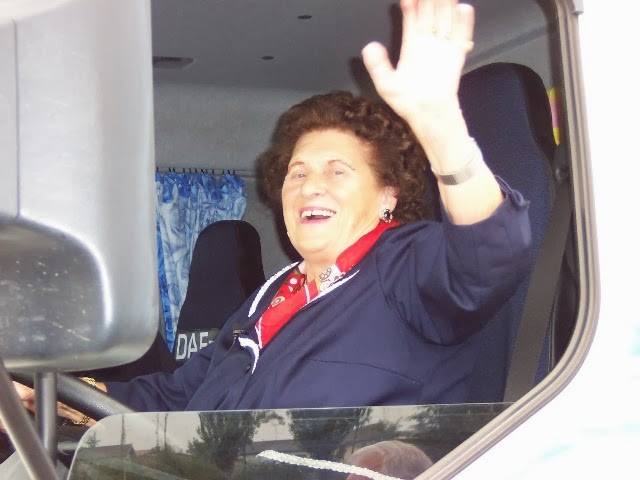
A slightly faded black-and-white photograph a very young woman leaning out of the window of her truck, elbow resting on the door, a calm smile on her face. This is how Nora Pizzati appears—a woman who crossed twentieth-century Italy from an unusual perspective: behind the wheel.
In an era when work was rigidly divided between what was considered “men’s work” and what was not, Nora became the first woman in Italy to drive a truck professionally. A pioneer, even if she herself would probably never have defined herself as one.
Choice from Necessity

Her story takes shape in the immediate post-war years. With her husband taken prisoner and the need to support herself, Nora found herself alone in the countryside of Roncoferraro, in the province of Mantua. She worked in the fields, weeded rice paddies from a very young age and developed a resilient character forged by hardship and responsibility.
In 1948, during an agricultural strike, she found her first opportunity to earn a living: transporting ice for local dairies using a cart hitched to her bicycle. It was the beginning of a path that would gradually lead her to become an entrepreneur.
From Motor Tricycle to Truck
After years of night work and personal sacrifice, Nora managed to purchase her first motorised vehicle: an open Lambretta three-wheeler. The cab would come later, along with a profound change in her life. With her husband’s return and the acquisition of a transport licence, a four-wheel Dodge truck—of American manufacture—entered the picture.
From that moment on, the truck became the centre of her existence. She transported gravel, sand, and coal, carried out removals and accompanied dozens of families from the Mantua area to Milan or Switzerland, in search of new employment opportunities.
Thirty Years on the Road
For over thirty years, Nora drove relentlessly, crossing Northern Italy in every season and under all weather conditions. She set off at dawn and returned at night, facing fog and cold with rudimentary vehicles and unwavering determination.
She spoke of journeys without breaks, of coffees forgone to save fuel, of windscreens cleaned with hot water and salt just to keep the road in sight. A daily routine built more on endurance than on heroism.
Ahead of Her Time
Paradoxically, Nora almost never officially obtained her driving licence. On the day of the exam, she was dismissed after a heated exchange with the examiner, whom she accused of failing to understand what it really meant to drive. An episode that speaks volumes about the cultural climate of the time.
A wife and mother of two, Nora witnessed Italy’s transformation from the window of her truck. She helped break a deeply rooted stereotype, proving that competence and determination have no gender.
A Quiet Legacy
Nora Pizzati’s story is that of an ordinary woman who did something extraordinary—perhaps without even realising it. A reminder that change sometimes comes through everyday actions and choices dictated more by necessity than by ambition.
This account has been reconstructed from interviews and testimonies published over the years in trade journals and local newspapers, preserving the memory of a figure who left a profound—if often silent—mark on the history of work and the road.